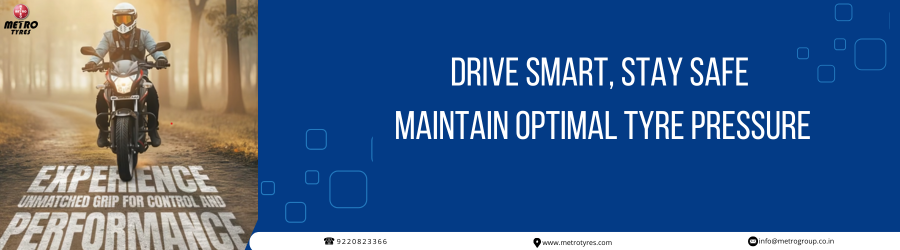
Drive Smart, Stay Safe – Maintain Optimal Tyre Pressure
Nov 12,2025
Introduction
Often seen as the unsung heroes of vehicle performance, tyres are essential in balancing a vehicle with its road. As the only point of contact with the surface under, tyres are also crucial in ensuring ideal handling, comfort, and safety in addition to their apparently basic movement capability. They affect fuel economy, braking power, and general driving experience, beyond simple propulsion. Tyres' careful design, composition, and condition define the grace with which a vehicle negotiates curves, accelerates, and maintains stability, thereby underlining their great relevance in the complex act of automotive mechanics. Hence, maintaining appropriate tyre pressure becomes a critical component in ensuring not only the performance of the vehicle but also the occupant's safety.
Tyre Pressure Measurement and its Effect on Optimal Functionality
Measuring in PSI (Pounds per Square Inch), a unit of pressure, tyre pressure indicates the force applied on the inner walls' surface area. This measurement is vital as it ensures the exact air balance within the tyre, determining its best performance. Under-inflation brought on by too little air or inadequate tyre pressure may cause too much rolling resistance, worse fuel economy, and more tyre wear. Conversely, too much air—also known as over-inflation—results in a stiff, too-tight tyre that reduces contact with the road surface, increasing exposure to road hazards, a rough ride, and perhaps unequal tread wear.
Tyre pressure, be it the best grip tyre for bike or any other vehicle, affects internal structure of the tyre, thereby affecting its adaptability to different driving circumstances, so transcending simple inflation. Appropriately filled tyres provide equal distribution of the air within, enabling maximum contact with the road and ensuring stability, traction, and responsive handling. This delicate balance controls a tyre's ability to absorb shocks, negotiate corners smoothly, and run consistently across varied weather. Maintaining safety and performance depends on continuous monitoring and tyre pressure adjustment, hence ensuring the integrity of the car and its occupants.
Also Read: Front and Rear Bike Tyres: Key Differences, Handling, and Maintenance Tips
How to Check and Maintain Optimal Tyre Pressure
Maintaining ideal tyre pressure is a habit that ensures your bike or any other vehicle runs at its best. Using a manual gauge—a basic but useful instrument that gives an accurate reading when pressed to the valve stem—is the most often used method of verifying tyre pressure. On the other hand, many contemporary vehicles include automated tyre pressure monitoring systems (TPMS), which provide a practical and real-time fix by constantly alerting drivers of any variations from the advised pressure.
Regular tyre pressure check is essential; preferably once a month and before starting extended travels. This schedule helps avoid any problems that can compromise fuel economy or safety by under or over-inflation. If changes are required, most service facilities allow filling the tyre to the advised pressure. Modern technologies ensure the tyres are constantly within the ideal range by using digital readings and smartphone app monitoring.
Tyre Pressure for Different Driving Conditions
Be it the best grip tyre for bike or any other vehicle, tyre pressure must be adjusted to fit various driving conditions. Thus it is not a one-size-fits-all measurement that ensures either safety or best performance. On long road trips, particularly at high speeds, it is wise to somewhat raise tyre pressure to allow for the longer duration and heat generation from continuous driving. While short city journeys, marked by frequent stop-and-go traffic, may not call for such changes, urban efficiency depends on constant monitoring even in these cases.
Since lower tyre pressure is typically advised to improve grip and cushion the vehicle against rough terrain, therefore lowering the danger of tyre damage, off-roading and heavy load driving need even more careful consideration. Similar effects on tyre pressure might result from seasonal variations. Whereas hot weather causes expansion, cold weather causes air contraction, reducing tyre pressure. Correcting pressure during these variations ensures that tyres stay properly inflated independent of the season while maintaining performance, safety, and lifetime.
Also Read: 5 Must-Know Tips Before Buying Tubeless Tyres for a Bullet
Common Myths about Tyre Pressure
Often a topic of misunderstandings, tyre pressure is misinterpreted by many vehicle owners and results in habits that could compromise vehicle performance and safety. One widespread fallacy is the idea that overinflating tyres could improve fuel economy. Although under-inflation may lower economy, over-inflating tyres produce too much wear, lowers grip, and result in an unpleasant ride, jeopardizing safety. Maintaining the recommended tyre pressure ensures both maximum fuel efficiency and tyre lifetime in fact.
Still another misconception is about the frequency of tyre pressure inspections. Some think that once tyres are appropriately inflated, no further observation is required. The reality is, however, that air molecules gradually departing the rubber cause tyre pressure to drop over time. At least once a month, regular inspections are essential to minimize undetectable pressure loss and to prevent problems such as unequal tire wear or reduced handling. By dispelling these illusions, vehicle owners may develop healthier habits and ensure a safer and more effective driving experience.
Tips for Bike Owners for Appropriate Tyre Pressure
Maintaining suitable tyre pressure is a crucial habit for discriminating bike owners who give both performance and safety top priorities. First and most important, usually located on the sidewall of your tyres, always follow the manufacturer's recommended pressure guidelines. This ensures the best traction, control, and fuel economy. Tyres naturally lose air over time, hence routinely check tyre pressure, especially before lengthy rides. To precisely assess the pressure, get a dependable gauge; then, adjust appropriately. Remember that tyre pressure varies with temperature; so, make adaptations for seasonal variations. Well-maintained tyres pressure not only improves your riding pleasure but also greatly extends the durability of your bike by providing smoother, more controlled rides.
Concluding Remarks
When it comes to maximizing vehicle performance, safety, and maintaining the long-term economy, the importance of appropriate tyre pressure cannot be overlooked. Maintaining the recommended tyre pressure improves even wear, therefore increasing the durability of your tyres, and increasing control, and lowering the chance of tyre blowouts. Moreover, a properly-kept tyre system increases fuel economy, saving money and time as well as helping environmental sustainability. Regular tyre inspections are not just a habit; rather, they are a necessary investment in the health and safety of your vehicle and the riding conditions. By adopting this basic habit, you are maximizing the efficiency of your vehicle, ensuring that every trip is safer, more inexpensive, and easier.
Also Read: Impact of the Right Tyres on Performance, Safety, and Comfort
Article you may like